

It's Saturday afternoon. You've invited six friends over for a braai, and you've got R300 to spend on meat.
You're standing at the butcher trying to decide what to get. Two options catch your eye.
The fire's going nicely. Someone's opened a beer. You're catching up with friends, and for a while you've completely forgotten about the braai.
While you're distracted, there's a flare-up on one side of the braai.
By the time you remember to check on the roast, a large part of it is badly burnt. You manage to salvage about 40% of it.
Not quite what you had in mind when you invited six people over.
See what would have happened with the other optionThe fire's going nicely. Someone's opened a beer. You're catching up with friends, and for a while you've completely forgotten about the braai.
While you're distracted, there's a flare-up on one side of the braai.
Unfortunately, that's exactly where you've placed the little roast. By the time you remember to check on the braai, it's burnt beyond saving.
The wors, chops and chicken were farther away from the flames and are still fine. You've lost 20% of your meat, but there's still plenty to go around.
Nobody needs to know about the roast.
See what would have happened with the other optionWhat if you'd chosen differently?
Both braais had the same problem: a flare-up on one side of the fire.
The difference was how much of your meal was exposed to it.
From meat to money
The same idea applies when you invest. How much of your money is exposed when something goes wrong?
Imagine you have R300 to invest. You could put it all into shares in one company, or spread it across four companies.
In the first portfolio, all R300 is invested in Company A.
In the second, your R300 is divided between four companies. Company A accounts for just 20% of your investment, or R60.
Now imagine Company A loses 60% of its value.
Which portfolio do you think would be hit harder?
If all R300 was invested in Company A, a 60% fall would leave you with just R120.
But in the four-company portfolio, only R60 was invested in Company A. A 60% fall in that portion means losing R36, not 60% of your entire investment.
You'd still have R264, assuming the other three companies hadn't changed in value.
This is the idea behind diversification.
By spreading your money across several companies, you reduce how much any single company's performance affects your investment.
Of course, that doesn't mean you can't lose money. Several companies can fall in value at the same time, and sometimes entire markets have a terrible year.
Do you really have to buy all those shares yourself?
Spreading your money across several companies sounds sensible. But what if you wanted to invest in 100 companies? Or even 500?
You could buy shares in each company individually, but you'd have to decide which ones to buy, how much to invest in each, and keep track of them all.
An exchange-traded fund (ETF) offers another way. It's a fund that you can buy and sell on a stock exchange, much like an individual share. Many ETFs let you invest in a collection of companies through a single purchase.
Think of the mixed braai pack. Instead of choosing and buying each piece of meat separately, you buy the whole pack.
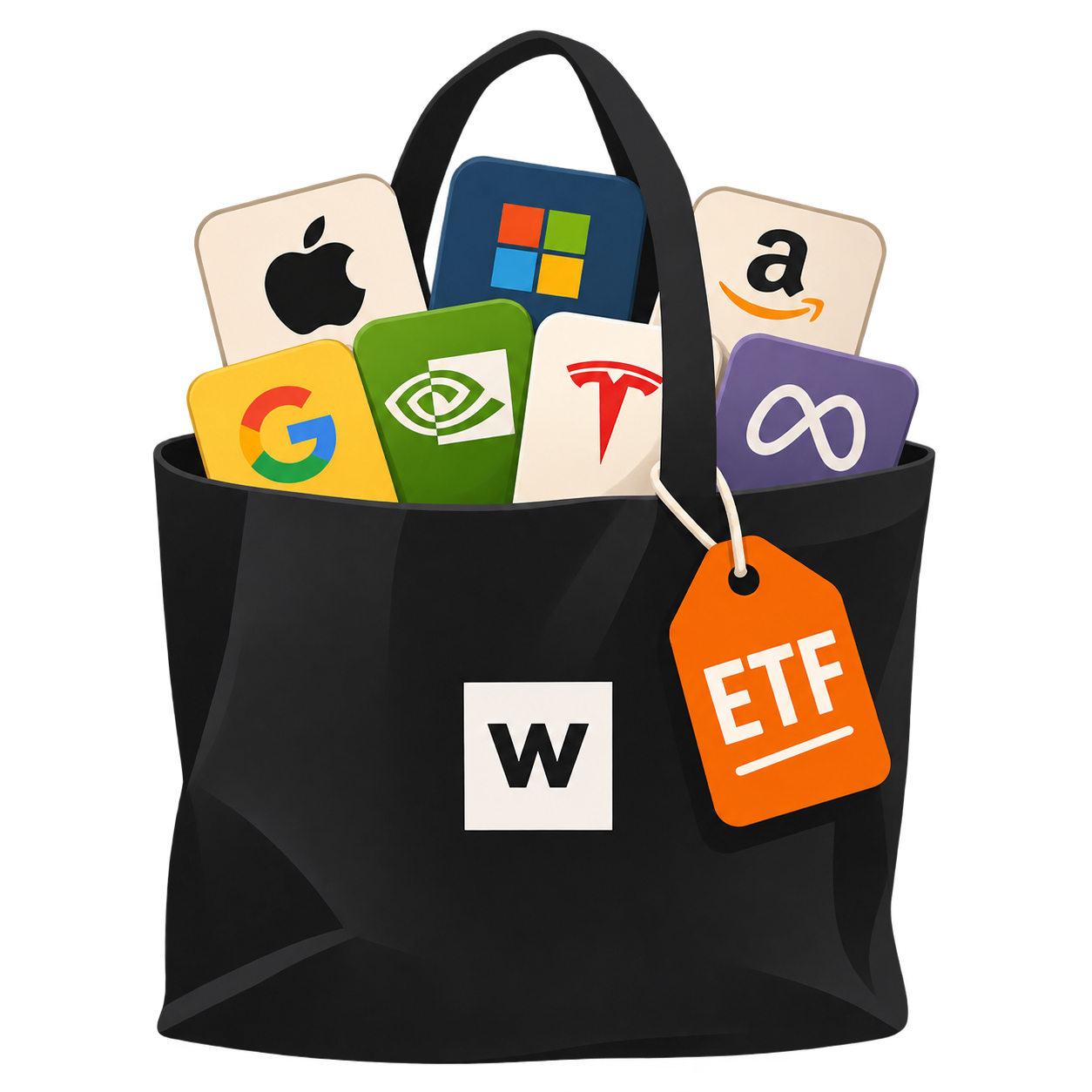
An ETF works in a similar way. Depending on which one you choose, it might hold shares in dozens, hundreds or even thousands of companies.
But just like the mixed braai pack, what's inside matters. An ETF holding lots of companies in the same industry, for example, might not spread your risk as widely as you think.
You don't have to pick the winner
It's tempting to think that successful investing means finding the right company at the right time.
But you don't have to predict which company will be the next big success story. You can spread your money across many companies, knowing that some will do better than others.
That's what diversification gives you: a way to reduce how much your investment depends on the fortunes of any single company.
An educational illustration, not financial advice. Food outcomes and company shocks are fictional. No ETF suitability or return is implied.
Try the other braai