Why paying only your credit card minimum can keep you in debt for years
After months, or even years, of paying off your credit card, opening your statement can sometimes feel like a slap in the face. You've been religiously making the minimum payment, you haven't missed a single due date, and you've even resisted the temptation to put anything else on the card.
But there it is. A balance that seems to have barely moved from the starting line. What gives?
The problem isn't that you lack discipline. You likely have that in spades. Rather, it's that you've been following a set of rules that aren't necessarily designed to get you out of debt quickly.
Let's explore a fictional example to see how those rules play out over time.
You're driving along, minding your own business, when you hit a pothole that has life ambitions of becoming a swimming pool. You know the type I'm talking about... a pothole that Helen Zille might be tempted to take a dip in.
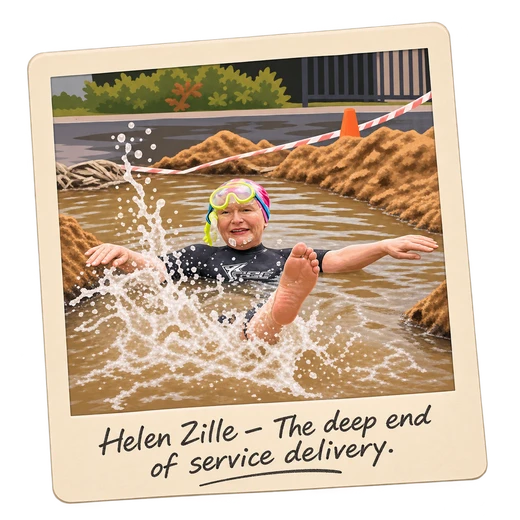
Your car, for the most part, survives. Its suspension, however, does not.
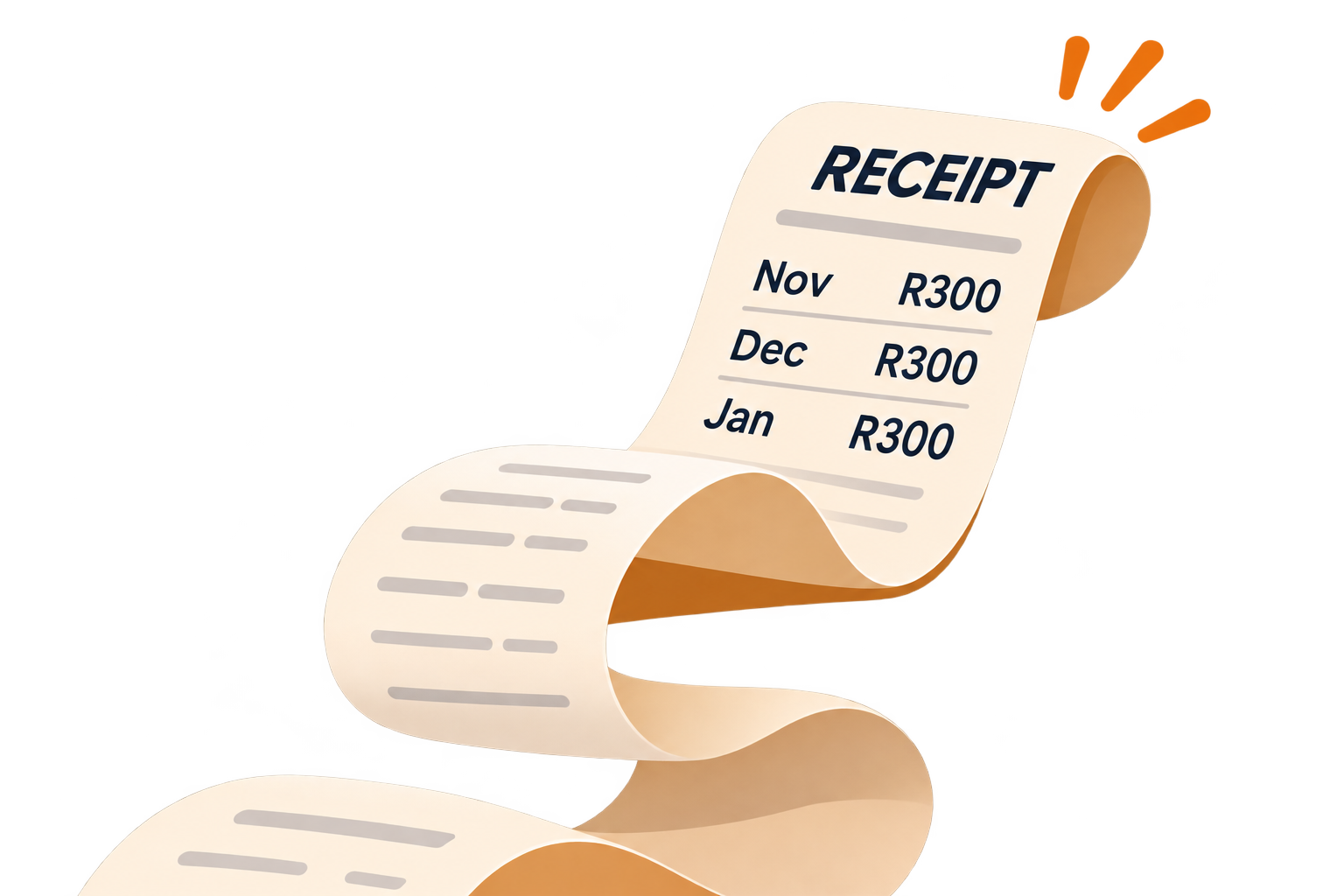
A few days later, the mechanic hands you a R10,000 repair bill. You put it on your credit card, figuring you'll pay it off over time. When your first statement arrives, the bank has asked for a minimum payment of R300.
This example uses a fictional card with a 20% annual interest rate and a 3% minimum-payment rule. It includes no fees or further spending. Your own card may have different terms.
Your first statement arrives.
There are three things worth paying attention to: how much you owe, the minimum you need to pay, and when that payment is due.
In this example, you owe R10,000, and the bank requires at least R300 by 20 November.
Where did the R300 minimum come from?
Minimum payments are calculated as a small percentage of your outstanding balance (often between 3 and 5%). In this example, the bank requires 3% of the balance owed.
R10,000 × 3% = R300.
That's what you need to pay this month to meet the bank's minimum requirement. But, as you'll discover, it's not necessarily the amount that will get you out of debt quickly.
So where does your R300 go?
You've paid the R300 the bank asked for. So, how much of that payment actually reduced your R10,000 repair bill?
Reveal payment split
Just R20.55.
Almost all of your first payment went towards interest, leaving just R20.55 to reduce the original repair bill.
Just R20.55.
In this fictional example, that's a particularly expensive first payment. Your own split will depend on your card's terms and how long you've carried the balance. Irrespective, the key takeaway is simple: interest eats up part of your payment before a cent goes toward reducing your debt.
What happens to your minimum over time?
What do you think happens to your minimum payment as your balance gets smaller?
Reveal next minimum
It gets smaller.
Each month, the bank recalculates your minimum based on your smaller outstanding balance. In other words, as your balance decreases, so does the amount you're required to pay, until the minimum-payment floor applies.
For this example, your next minimum is reduced from R300 to R299.38.
Twelve payments, each a little smaller.
This pattern continues past your second payment. Notice how the first twelve payments gradually creep lower each month.
While paying less each month may sound like good news for your budget, remember that interest takes the first cut of every payment. And a smaller minimum payment simply means less money is going toward reducing your actual debt. This slowing pace can stretch a relatively small balance into years of ongoing repayments.
A year later. What's left?
You've now made twelve payments without missing a single one, and you haven't put anything else on the card.
How much of the original R10,000 do you think you still owe?
Reveal the balance after twelve payments
You still owe R8,606.79.
You've paid R3,381.16 over twelve months. But almost 59% of that money went towards interest.
Five years later.
Five years have passed since that unfortunate pothole encounter and you've made every minimum payment.
In total, you've paid R12,583.37, which is now more than the original R10,000 bill. Yet you still owe R4,521.29. The bank is also asking you for considerably less than R300, with your minimum payment sitting at only R137.50.
Where does that R137.50 go?
That sounds like progress. And to be fair, you have paid off some of the debt. But take a closer look at how much you're still paying in interest, and how much of your latest payment is actually reducing what you owe.
More than half of this R137.50 payment still goes towards interest: R75.34, leaving R62.16 to reduce the debt.
Remember your prediction?
By only making the minimum payment each month, it actually took you almost 15.5 years to clear the debt. You also paid over R11,000 in interest, which ended up being more than the original R10,000 debt you started with.
Read the complete receipt (includes answers)
THE SYLLABUS
- Payment 1R300.00
- Payment 2R299.38
- Payment 3R295.32
- Payment 4R291.48
- Payment 5R287.69
- Payment 6R283.47
- Payment 7R279.78
- Payment 8R275.99
- Payment 9R272.40
- Payment 10R268.70
- Payment 11R265.20
- Payment 12R261.75
Interest R1,987.95 · Repair R1,393.21
Your first statement arrives.
There are three things worth paying attention to: how much you owe, the minimum you need to pay, and when that payment is due.
In this example, you owe R10,000, and the bank requires at least R300 by 20 November.
Where did the R300 minimum come from?
Minimum payments are calculated as a small percentage of your outstanding balance (often between 3 and 5%). In this example, the bank requires 3% of the balance owed.
R10,000 × 3% = R300.
That's what you need to pay this month to meet the bank's minimum requirement. But, as you'll discover, it's not necessarily the amount that will get you out of debt quickly.
So where does your R300 go?
You've paid the R300 the bank asked for. So, how much of that payment actually reduced your R10,000 repair bill?
Just R20.55.
Almost all of your first payment went towards interest, leaving just R20.55 to reduce the original repair bill.
In this fictional example, that's a particularly expensive first payment. Your own split will depend on your card's terms and how long you've carried the balance. Irrespective, the key takeaway is simple: interest eats up part of your payment before a cent goes toward reducing your debt.
What happens to your minimum over time?
What do you think happens to your minimum payment as your balance gets smaller?
It gets smaller.
Each month, the bank recalculates your minimum based on your smaller outstanding balance. In other words, as your balance decreases, so does the amount you're required to pay, until the minimum-payment floor applies.
For this example, your next minimum is reduced from R300 to R299.38.
Twelve payments, each a little smaller.
This pattern continues past your second payment. Notice how the first twelve payments gradually creep lower each month.
While paying less each month may sound like good news for your budget, remember that interest takes the first cut of every payment. And a smaller minimum payment simply means less money is going toward reducing your actual debt. This slowing pace can stretch a relatively small balance into years of ongoing repayments.
A year later. What's left?
You've now made twelve payments without missing a single one, and you haven't put anything else on the card.
How much of the original R10,000 do you think you still owe?
You still owe R8,606.79.
You've paid R3,381.16 over twelve months. But almost 59% of that money went towards interest.
Five years later.
Five years have passed since that unfortunate pothole encounter and you've made every minimum payment.
In total, you've paid R12,583.37, which is now more than the original R10,000 bill. Yet you still owe R4,521.29. The bank is also asking you for considerably less than R300, with your minimum payment sitting at only R137.50.
Where does that R137.50 go?
That sounds like progress. And to be fair, you have paid off some of the debt. But take a closer look at how much you're still paying in interest, and how much of your latest payment is actually reducing what you owe.
More than half of this R137.50 payment still goes towards interest: R75.34, leaving R62.16 to reduce the debt.
Remember your prediction?
You estimated it would take to repay the R10,000 repair.
By only making the minimum payment each month, it actually took you almost 15.5 years to clear the debt. You also paid over R11,000 in interest, which ended up being more than the original R10,000 debt you started with.
Selected payment milestones, not a scale of time or money.